The Seafood Consumers Association is pleased to announce this webinar in conjunction with FAO Globefish – “Aquatic Food Fraud - Impacts on Markets and Consumers and Tools to Fight it”
When: Thursday 18 June 2026 10:00–12:00 CEST (1800-2000hrs Melbourne)
𝗙𝗼𝗿𝗺𝗮𝘁: Online via Zoom (FREE but you must register)
𝗟𝗮𝗻𝗴𝘂𝗮𝗴𝗲: English Register here https://fao.zoom.us/webinar/register/WN_3eQiSzc8Tm6dlCh5cjFSiQ#/registration or https://lnkd.in/eY_un56X
The webinar will feature: Expert presentations; Live polling; A moderated panel discussion; Audience Q&A
INFORMATION
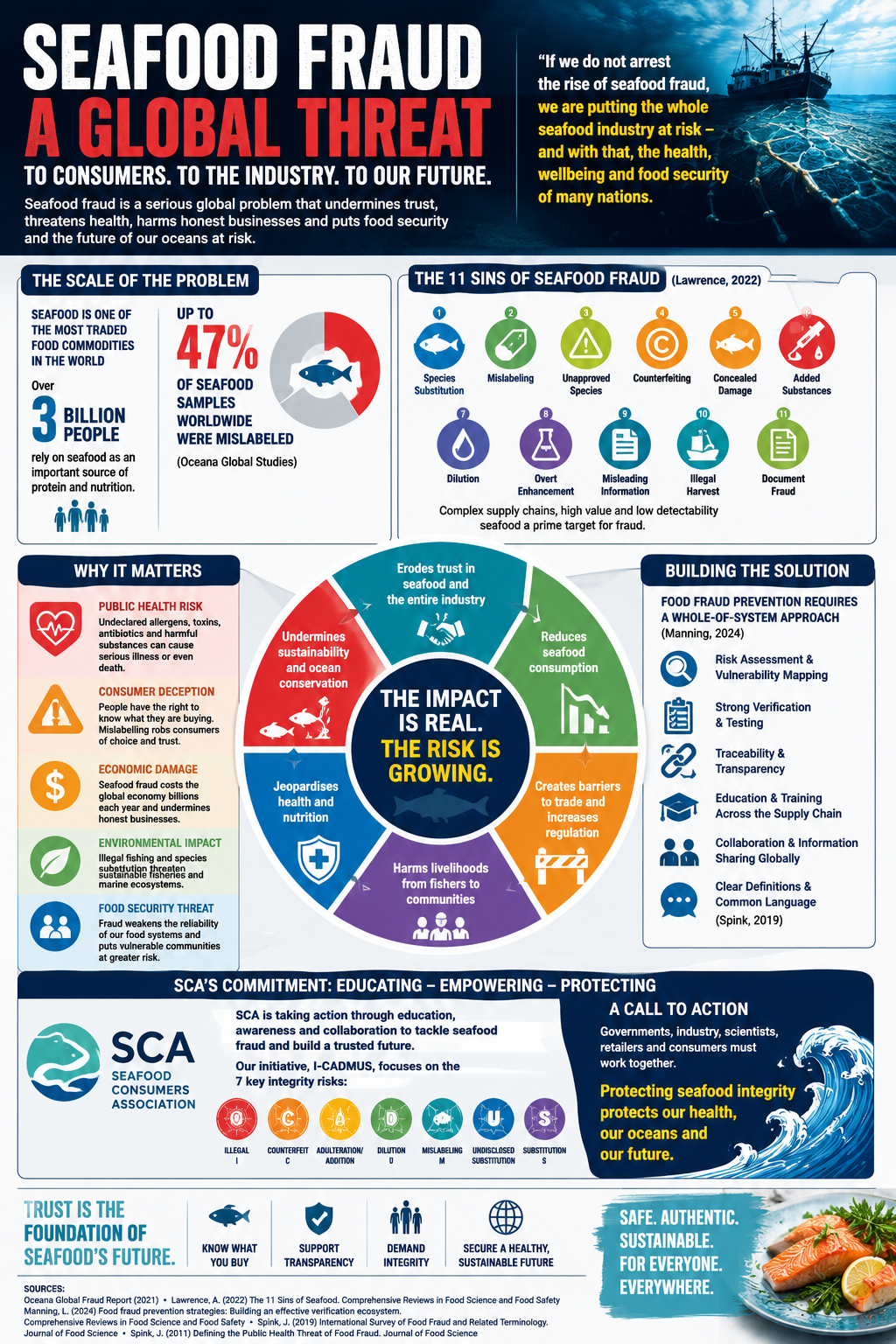
There is no official estimate of how prevalent fraud is in the $195 billion global fisheries and aquaculture sector, but empirical studies suggest that 20 percent of the trade may be subject to some type of fraud, notably higher than for meat and fruits and vegetables, largely due to the vast diversity of species in the sector.
Fish fraud is defined in the report as “a deliberate practice intended to deceive others” and, depending on the type of deceit it can pose risks to biodiversity, human health or economic systems. The main categories of fish fraud are adulteration (adding coloring to make tuna look fresher), counterfeit (imitation shrimp made from starch-based compounds), simulation (packaging surimi to seem like crab meat), diversion (distributing legitimate products outside of their intended markets), misbranding (such as incorrect claims about sustainability), overrun (involving overfishing), species substitution (selling tilapia as red snapper), tampering and mislabeling (involving origins and even expiry dates), and theft.
Beyond economic losses, it can undermine consumer trust, fair competition, public health and sustainability.
As part of the FAO #GLOBEFISH Webinar Series 2026, this upcoming online session will explore how market demand, price incentives, and supply-chain complexity create conditions for fraudulent practices, and what governments, industry, retailers, researchers and standard-setting bodies are doing to strengthen transparency, traceability and authenticity. It is also relevant to consumers to understand what is happening.
Of interest for stakeholders working across fisheries, aquaculture, seafood trade, food safety and sustainability.
If you've registered, please complete a short pre-webinar survey to share your perspectives on fraud affecting fisheries and aquaculture products here https://forms.cloud.microsoft/Pages/ResponsePage.aspx?id=aMQ6Frir0ESB_dnbFeOvlvhs19BtU_pDqJ_Nqv8t55VURDNPWVA0NVE3RzkwU0szVTFCMEhBVFZVOC4u or https://lnkd.in/e3rjMhan
If the time is not suitable, please register to obtain recording of the event to view at your leisure
We look forward to seeing you there
Feel free to share this with your colleagues, suppliers, and buyers - the sooner you can engage and understand the issues the better
Reading - Food fraud in the fisheries and aquaculture sector

Comments
No comments yet.