Deep Roots, Deep Waters
A message from the Seafood Consumers Association for National Reconciliation Week 2026 (#NRW2026)
As we observe National Reconciliation Week, it is a vital time for all of us connected to Australia’s seafood community—from consumers to industry leaders—to reflect on the profound legacy of First Nations peoples.
For tens of thousands of years, Aboriginal and Torres Strait Islander peoples have been the ultimate stewards of our waterways, oceans, and aquatic resources. Their historical practices represent the foundation of what we now strive for when we advocate for a sustainable, holistic Blue Economy.
Budj Bim: The Birthplace of Global Aquaculture
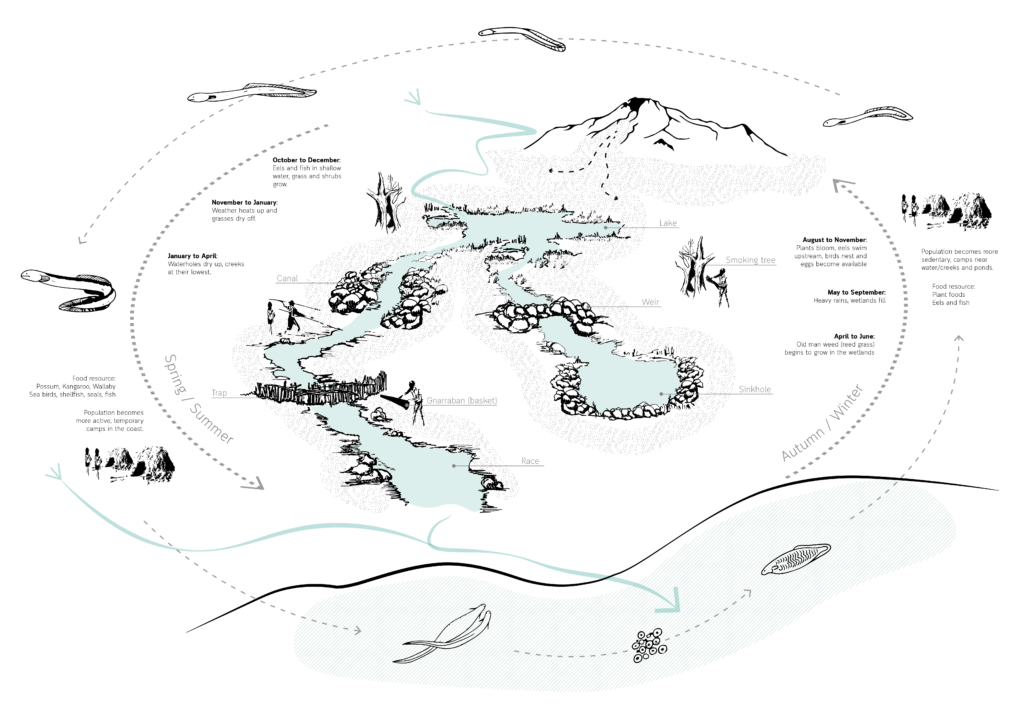
When we think of aquaculture, we often picture modern technology. Yet, in Victoria, the Gunditjmara people established what is widely recognised as the world's oldest and most extensive aquaculture system. The Budj Bim Cultural Landscape, crafted from volcanic rock over 6,000 years ago, features a complex network of channels, weirs, and ponds designed to manage water flows from Lake Condah. This ingenuity allowed the Gunditjmara to sustainably trap and harvest ‘kooyang’ (short-finned eels). Using woven river reed baskets to sort eels by size and weight, this system supported thriving, permanent communities and trade networks. It dispels the historical myth of a strictly nomadic existence and stands as a testament to advanced environmental engineering.
Baiame's Ngunnhu: The Ancient Genius of the Brewarrina Fish Traps Beyond Victoria
The genius of Indigenous aquatic management stretches across the continent. On the Barwon River in New South Wales lie the Brewarrina Fish Traps, traditionally known as Baiame's Ngunnhu. Estimated to be up to 40,000 years old, this elaborate network of stone weirs is considered one of the oldest human-made structures on Earth. The Ngemba people, alongside neighbouring groups, engineered these tear-drop-shaped stone walls to withstand powerful river floods and guide native fish into holding ponds during both high and low flows. Crucially, the traps were managed with strict social and ecological lore: families held responsibilities for specific ponds, ensuring that fish populations were never depleted and that communities downstream received their share. It was a flawless system of accountability and equitable resource sharing.
Lessons for a Modern Blue Economy
As we work toward eliminating deception in the seafood industry and push for genuine transparency, there is much to learn from these ancient practices. Indigenous aquaculture and fishing were never about over-extraction; they were built on the principle of taking only what was needed and leaving the rest to ensure future generations could thrive. This philosophy is the essence of a true-Blue Economy—a strategic framework that looks after all water and its associated products, ensuring food security, nutritional integrity, and ecological balance. By acknowledging and learning from First Nations knowledge, we can better understand how to govern our aquatic resources today.
Moving Forward Together
Reconciliation requires truth-telling, education, and a willingness to listen. As seafood consumers, we have a responsibility to look beyond the plate and understand the rich, complex history of the waters from which our food is sourced.
This #NRW2026, we encourage everyone to learn more about the enduring connection First Nations peoples have to Sea Country and freshwater ecosystems. By supporting Indigenous fishing rights and integrating traditional wisdom into modern aquatic management, we can foster a more respectful, accountable, and sustainable future for all Australian waters.
Comments
No comments yet.