
The Shiny Tech and Fractured Strategy of Australia's Seafood Traceability
On June 2, 2026, the Australian Nuclear Science and Technology Organisation (ANSTO) hosted its highly anticipated Seafood Provenance Workshop. The event gathered 40-50 stakeholders in person and online (17 to 20), to showcase an undeniable triumph of domestic nuclear science.
Since 2019, with funding backed heavily by the Department of Agriculture, Fisheries and Forestry (DAFF), ANSTO has been developing a novel provenance technology. By combining handheld X-ray fluorescence (XRF) analysis with an AI-powered algorithm, researchers have found a way to scan a piece of seafood and match its elemental profile to a specific geographic region. In simple terms, it maps a "geographic fingerprint" across top-order, mid-level, and benthic species.
It is an extraordinary technological achievement. But from the perspective of the Seafood Consumers Association (SCA), the workshop highlighted a glaring, frustrating paradox: Australia possesses world-class forensic food science, yet we are completely lacking the systemic, national regulatory framework required to put that science to work for everyday consumers.
The Massive Scale of Deception
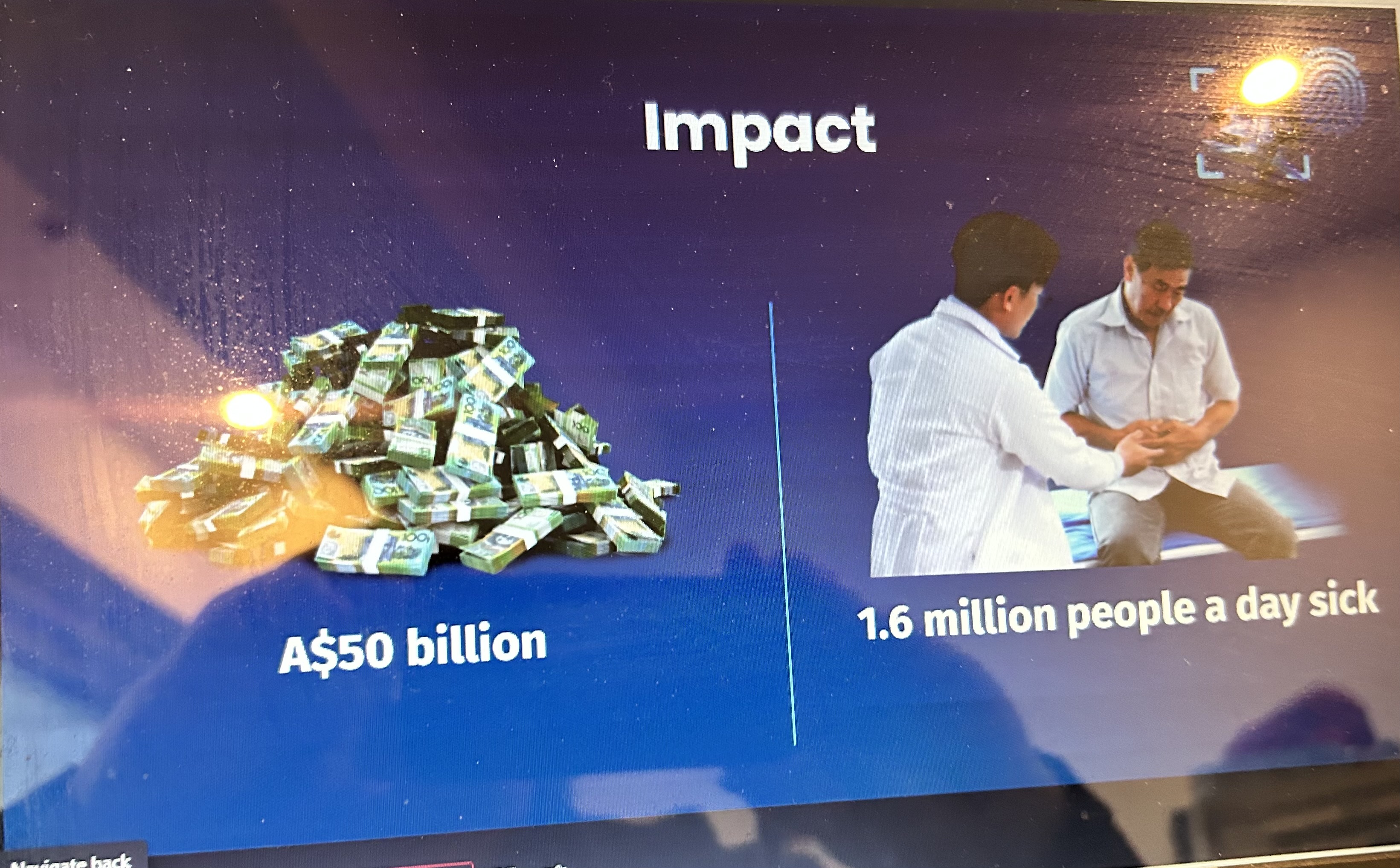
The workshop kicked off by laying bare the staggering economic and human cost of food deception. Globally, food fraud is estimated to be a $50 billion problem, costing Australia alone $2 to $3 billion annually.
But it is not just a financial crime; it is a critical public health threat. Dr. Debashish (Deba) Mazumder from ANSTO pointed out that globally, 1.6 million people fall ill every single day from foodborne sickness, resulting in 400,000 to 500,000 deaths annually.
Whether it is consumers buying "free-range" chicken and unknowingly receiving "corn-fed" substitutes, or diners buying premium local fish and getting imported, fraud thrives in the dark. Take South Australia’s iconic Coffin Bay, for instance: the workshop highlighted that far more "Coffin Bay oysters" are sold across retail counters than are actually harvested from those waters. Criminals routinely hijack iconic regional names to clear unverified, cheaper oysters from other regions.
The Technical Reality: "DNA Does Not Prove Provenance"
One of the most sharp-shooting insights of the day came from Erik Poole of the Sydney Fish Market (SFM), which provided the verified wild samples (ranging from northern to southern NSW) to build ANSTO's reference database.
Poole dropped a truth bomb that every seafood consumer needs to understand: "DNA does not prove provenance."
A DNA test can tell you what species a fish is, but it cannot tell you where it was caught. To prove geographic origin, scientists must rely on trace element analysis, stable isotope testing, water sample profiling, and nuclear scanning.
The operational hurdles are immense. The Sydney Fish Market alone sells over 500 different species. When fraud occurs, retailers naturally defend themselves with a shield of "not from my shop," making bulletproof, unassailable evidence mandatory.
The holy grail of enforcement is a handheld XRF device. Imagine a local council food inspector walking into a restaurant or market, scanning a fillet on the spot, and instantly exposing a fraud. Such a tool would revolutionize food safety, origin tracking, and environmental monitoring (such as detecting toxic algal blooms).
The Broken Landscape: Progress in Isolation
The second half of the workshop showcased how these nuclear fingerprinting models are expanding. We heard brilliant presentations detailing:
- The National Measurement Institute (NMI): General Manager Tim Stobaus discussed using Nuclear Magnetic Resonance (NMR) to trace authenticity in honey and wine, noting strong interest from the Olive Oil Council.
- DCCEEW: A $1.2 billion data assurance project mapping coral reef harvesting to secure a premium $30–40 million export industry.
- NAAKPA: CEO Paul Saeki highlighted how indigenous bushfoods are utilizing provenance tech to protect traditional knowledge, securing millions in grants from DAFF and the Indigenous Land & Sea Council.
- Australian Garlic Producers: Partnering with ANSTO to safeguard local farming roots against cheaper, potentially bleached imports.
But here is the catch: This is brilliant science happening in deep, isolated silos.
While DAFF pours millions into separate, fragmented traceability projects, the broader Australian seafood ecosystem remains incredibly vulnerable. Erik Poole reminded the room that Australia remains reliant on imports for over 70% of its seafood consumption.
The Looming 1 July 2026 Cliff
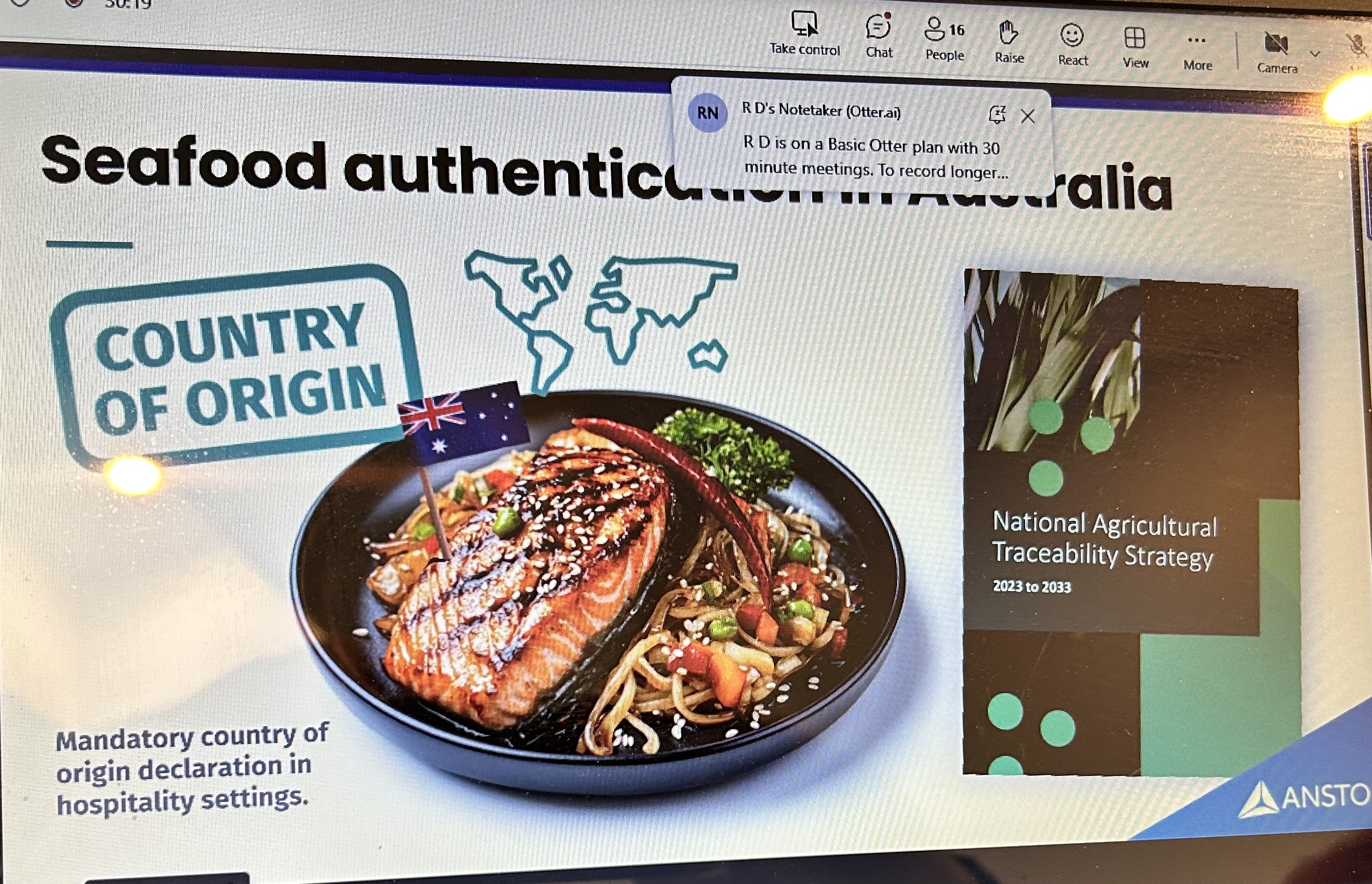
The absolute proof of this systemic disconnect came during a presentation by Dr. Igor Pirozzi (NSW DPI Fisheries / Aquaculture Research Advisory Committee). He rightfully raised the critical importance of mandatory seafood labeling in the hospitality sector and pointed to the Country-of-Origin Labelling (CoOL) legislation coming into effect on July 1, 2026.
Astonishingly, it became apparent that many food sector researchers/stakeholders in the room were completely unaware that this major regulatory shift takes effect next month.
This is the fatal flaw in Australia's current strategy. We are funding elite, multi-million-dollar nuclear scanning tools, yet we aren't even successfully communicating baseline regulatory changes to the industry players operating on the ground.
The SCA Verdict: Moving from Silos to the Shop Floor
The Seafood Consumers Association applauds ANSTO, DAFF, and their collaborators for their undeniable scientific breakthroughs and knowledge. Knowing that we can geolocate an octopus or an oyster using trace elements is fantastic.
But shiny technology will not stop seafood fraud if it remains trapped in a scientific silo.
We don't just need highly accurate lab tools. We need a unified, national capability framework that integrates this science directly into everyday consumer protection. If a council inspector doesn’t have that handheld scanner, and if hospitality operators don’t even know the labeling laws are changing, the criminals using fake names to sell counterfeit fish will keep winning.
It’s time to stop funding isolated science projects and start building a coordinated, unassailable wall of transparency across the entire Australian food supply chain. For example, we have an Australian Fish Names Standard AS5300 (AFNS) which is globally recognised (it was won awards) yet this is still a VOLUNTARY code in FSANZ Food Standards Code – if it was MANDATORY then there would be some ‘teeth’ in the process. Consumers through their tax dollars (known in research terms as ‘public good’) have shared the minimum $6 million plus that industry research has invested in the AFNS.
What do you think? Should the government prioritize funding local enforcement tools or high-end lab research? Let us know in the comments and join with us at the Seafood Consumers Association to help us demand real, systemic change!
“26 Million Voices. One Seafood Future.”
Comments
No comments yet.