

History, Harvest, and the Perfect Boil
Whether you spent your childhood dangling a piece of meat on a string into a muddy creek, or you have recently enjoyed them on the menu of a high-end restaurant, the yabby is an undisputed Australian culinary icon. But beyond the nostalgia, there is a fascinating history and a complex commercial industry behind these resilient freshwater crustaceans.
Here is everything you need to know about the yabby, from how to spell it to how to cook it.
Yabby or Yabbies? Sorting out the name let us settle the spelling debate right away: the accepted singular spelling is Yabby," and the plural is "Yabbies". The name itself has deep indigenous roots. The word "yabby" is a borrowing from the Wemba Wemba language of Victoria, with the earliest written evidence of the term dating back to the 1840s.
The Yabby was recorded by early European explorers, including Thomas Mitchell in 1831 and during Eyre’s 1845 expedition. In 1894, the Horn expedition into Central Australia noted that the crustacean was eaten regularly by wandering tribes who referred to it as the "yabber". However, their culinary history goes back much further; remains of yabby shells found in riverside middens prove they were a welcome item on Aboriginal menus as far back as 28,000 years ago.
Depending on where you are in Australia, regional nicknames vary—for instance, some folks in Queensland refer to freshwater crustaceans as "crawchies," while others use the term "lobbies".
The Commercial Yabby Industry - While catching them remains a popular country pastime, the yabby has firmly gained the attention of gourmets over the past decade. Despite this, the commercial farming industry remains incredibly unique compared to other seafood sectors.
Farm Dam Harvesting: The vast majority of commercial aquaculture yabby production in Australia does not come from high-tech facilities, but from trapping yabbies in existing farmers' dams originally built to water livestock.
The Western Australian Hub: Interestingly, yabbies are not actually native to Western Australia; they were introduced from western Victoria into the WA wheatbelt in 1932. Today, the yabby industry harvests around 4,000 to 6,000 farm dams in Western Australia. This translocated WA population now accounts for the majority of national yabby production.
Production Volumes: Because the industry relies on farm dams, it is highly opportunistic and vulnerable to climatic variables like drought. Depending on rainfall, yabby farming in the WA wheatbelt produces around 100 to 300 tonnes annually.
Intensive Farming Challenges: There have been attempts to farm yabbies more intensively in purpose-built ponds, but these have been economically non-viable due to prohibitive costs and the yabbies breeding uncontrollably early during the grow-out phase. Additionally, they have strong cannibalistic characteristics – a weak yabby is soon food for the family.
Global Demand: Australian yabbies are highly sought after internationally because they are larger than overseas competitors, free from major diseases, and possess the hardy ability to be landed alive in major international markets.
Seasons and Survival: The Ultimate Survivor - the yabby's scientific name is Cherax destructor. The "destructor" part of the name is well-earned, referring to the yabby’s active habit of burrowing deeply into levee banks and dam walls, which can cause considerable structural damage. They are incredibly hardy creatures.
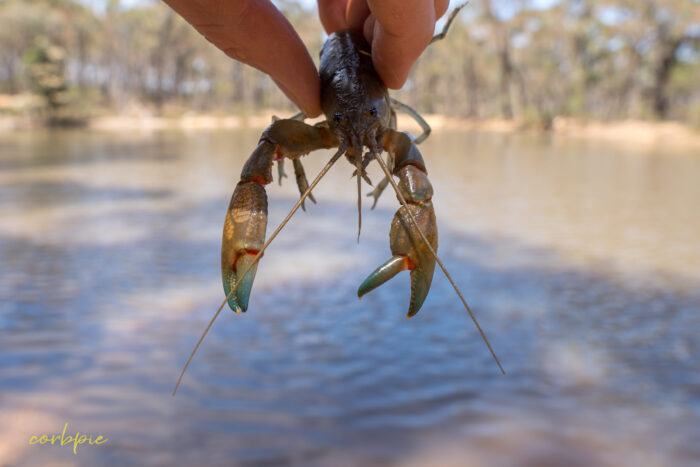
They can tolerate water temperatures ranging from near freezing all the way up to above 35ºC. Because they are cold-blooded animals, their activity slows down significantly during the winter, meaning few will enter baited commercial traps. As a result, the commercial supply of yabbies from dams is confined to the warmer months of the year. Breeding typically begins in spring when the water temperature hits 15 to 16ºC. Their most fascinating biological trait is how they survive severe droughts. As a dam or watercourse dries up, the yabby burrows down following the falling water table. It seals the entrance of its burrow with an earthen plug, creating a small, moist chamber at the bottom. The yabby then enters a state resembling suspended animation—a mechanism called ‘aestivation’—where its respiration, pulse, and digestion practically cease. They can survive like this for years, emerging only when wet periods return.
The Culinary Reward: Cooking and Eating. When it comes to eating, a feed of yabbies is considered one of the most delicious meals you can try.
Yield: Compared to spiny freshwater crayfish, yabbies actually yield much more meat for the overall size of the animal.
Flavour Profile: The meat is famously sweet, and the claws on larger specimens are particularly succulent.
Preparation: While they now appear on the menus of the best restaurants, you do not need to overcomplicate the cooking process. The absolute best way to prepare yabbies is to simply boil them for a few minutes in salted water.
Whether harvested commercially from a wheatbelt dam or caught with a piece of string in a local creek, the yabby is a true staple of Australian waterways and food culture.
Comments
No comments yet.