

How the Award-Winning St Kilda Pier Redevelopment Is Redefining Urban Ocean Care
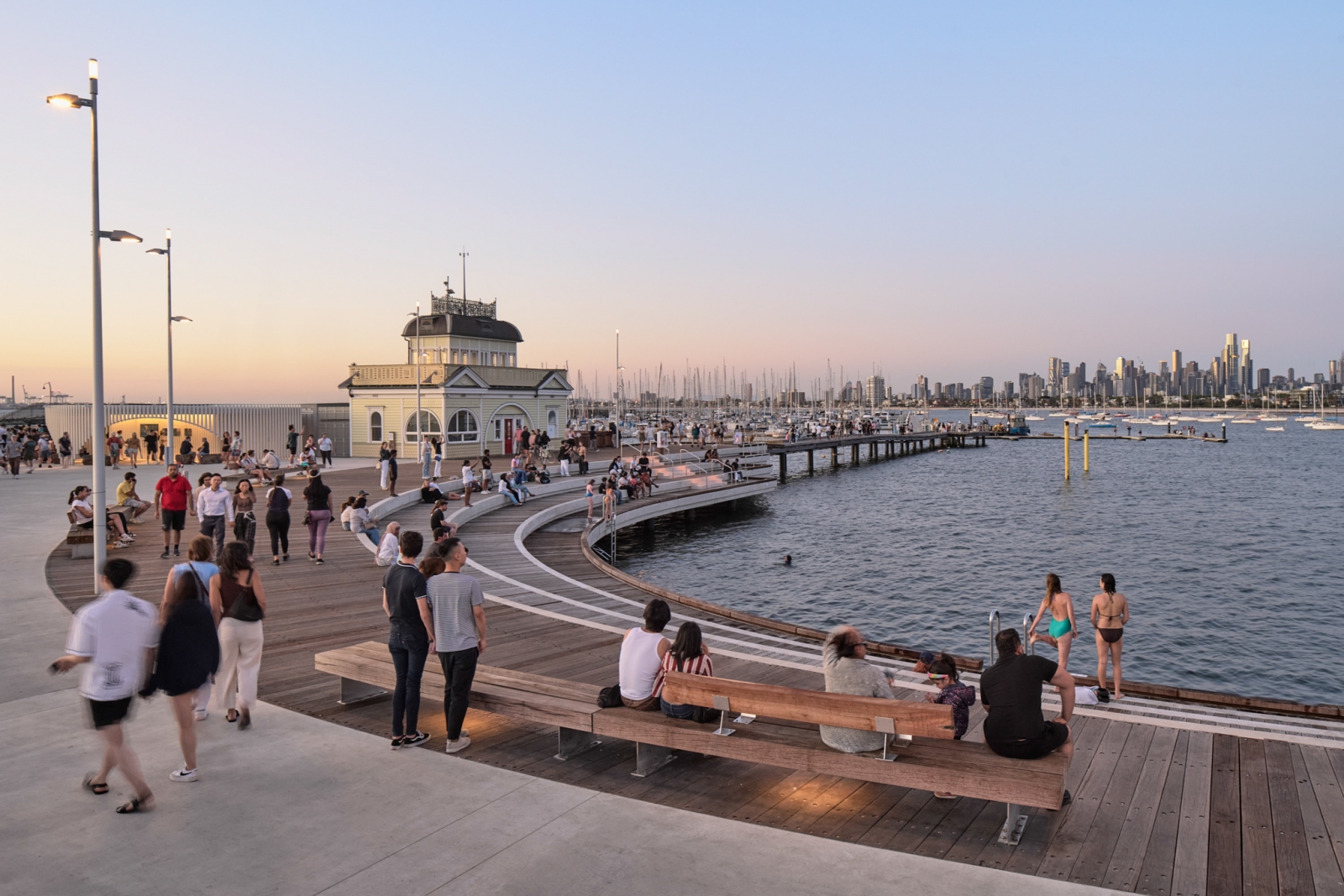
When the newly revamped St Kilda Pier complex officially opened, it was immediately embraced by Melbourne. The public flooded the sprawling new promenade, local fishers reclaimed their favorite casting spots, and—most importantly—the resident colony of over 1,000 Little Penguins (Eudyptula minor) continued to thrive in their urban sanctuary.
The success of the project was recently recognized at the Victorian Architecture Awards, where it received both the prestigious Victoria Medal and the Melbourne Prize.
Appearing on RRR Radio Marinara’s Life’s a Beach, the creative visionaries behind the redevelopment—landscape architect Chris Sawyer (Site Office) and architect Graham Burrows (JCB Architects)—discussed how a 19-year design journey transformed an aging piece of infrastructure into a world-class model for urban ecology and democratic public space.
A 50-Year Miracle: The Rise of St Kilda’s Urban Penguins
The story of St Kilda Pier is a testament to the resilience of marine life in unexpected human-made environments.
The original breakwater was constructed for the 1956 Melbourne Olympics, and by the 1970s, Little Penguins began naturally colonizing the rock pile. Decades later, Port Phillip Bay has recovered significantly in water quality and fish abundance—providing a rich diet of local anchovies that supports a booming colony of over 1,000 wild penguins right on the doorstep of Australia's second-largest city.
"It’s a beautiful story of urban ecology existing in a big city. It’s so rare to have such wonderful examples of urban ecology thriving on what was obviously a human-made piece of infrastructure... It gives you hope about ecology in general, and particularly ecology in the city."
— Chris Sawyer, Landscape Architect, Site Office
Balancing Community Access with Wildlife Protection
Replacing an aging pier structure while operating directly inside an active, noisy, and breeding penguin sanctuary presented extraordinary engineering challenges.
During the construction phase, every single penguin burrow had to be painstakingly mapped so construction workers could avoid disturbing nests. The construction team embraced strict environmental protocols to safeguard the birds, ensuring the colony remained safe and undisturbed.
Beyond protecting the colony during construction, the new architectural layout was specifically engineered to manage the long-term interface between massive human crowds and sensitive wildlife.
The design provides a broad, open, and "democratic" space that seamlessly balances multiple, overlapping community uses:
- Rec-Fishers & Boaters: Dedicated access zones for local fishers and yachting enthusiasts.
- Families & Promenade Strollers: Sweeping curved walkways and generous public plazas extending out into the bay.
- Eco-Tourism: Structured, regulated viewing pathways that allow visitors to observe the penguins without disrupting their natural behaviors or encroaching on burrows.
Fostering Ocean Custodianship in Port Phillip Bay
Unlike Sydneysiders, whose deep harbor is an inescapable part of the city's daily identity, Melburnians have historically had a more distant relationship with Port Phillip Bay.
By creating a durable, welcoming public platform out in the water, the new St Kilda Pier fundamentally alters how urban communities interact with their coastal environment.
"There aren't many public spaces that are located out in the bay... Having a public space that's located out in the water creates a really new and interesting relationship between people and their bay. And once you have that sense of ownership, you have that sense of custodianship as well, which then leads to protection and awareness."
— Graham Burrows, Architect, JCB Architects
The SCA Perspective: Infrastructure That Serves People and the Sea
For the Seafood Consumers Association (SCA), the St Kilda Pier redevelopment proves that human activity, public recreation, and marine conservation do not need to exist in opposition.
When urban infrastructure is thoughtfully designed to respect natural marine habitats, it builds community engagement, drives local eco-tourism, and fosters a genuine sense of environmental stewardship. Protecting our aquatic resources begins with giving the public opportunities to connect with the living ecosystems that share our coastal waters.
What are your thoughts? Have you visited the new St Kilda Pier complex yet? How can city planners better integrate marine ecology into public coastal infrastructure? Let us know in the comments below and support the Seafood Consumers Association today as we continue advocating for healthy oceans, vibrant coastal communities, and transparent supply chains!
“26 Million Voices. One Seafood Future.”
Comments
No comments yet.