

Why Your Fridge Freezer Is Ruining Fresh Fish
There is a widespread belief among seafood lovers that "fresh is always best," and if you can't eat it today, you can simply toss it into your home freezer for a rainy day.
At the Seafood Consumers Association, we love fresh catch as much as anyone. But if you are buying fresh fish with the intention of freezing it in your kitchen refrigerator, you are unknowingly destroying the texture, flavour, and nutritional value of your meal.
Understanding the science of ice crystals explains why commercially frozen seafood is almost always superior to home-frozen fish—and how to manage your freezer for the ultimate ocean-to-plate experience.
The Science of the Freeze: Blast Freezers vs. Kitchen Freezers
Why does home-frozen fish often turn out mushy, dry, and bland when thawed? It comes down to freezing speed and cellular damage.
Seafood flesh is composed of 70% to 80% water. When water freezes, it expands.
- The Home Freezer Problem: A standard household refrigerator freezer operates at around
 (or warmer in small top-compartment freezers that open constantly). When you place a piece of fresh fish inside, it freezes slowly over many hours. This slow cooling gives water molecules time to cluster into large, sharp ice crystals. These jagged microscopic knives puncture the delicate cellular walls of the fish muscle. When you thaw the fish, all its internal moisture and juices drain out onto the plate—a process known as drip loss—leaving you with a dry, stringy dinner.
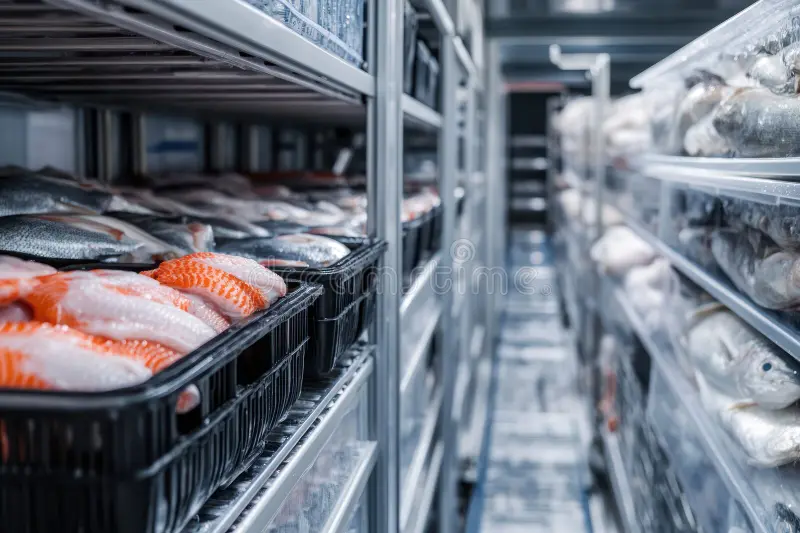
 - The Commercial Advantage: Commercial seafood processors use industrial blast freezers running at ultra-low temperatures between and with high-velocity forced air. This flash-freezes fish in a matter of minutes, completely bypassing the ice-crystal expansion zone. The moisture inside the fish freezes into millions of tiny micro-crystals that keep the cell walls completely intact.
When you thaw commercially blast-frozen seafood, it returns to a state virtually indistinguishable from the moment it came out of the ocean.
The Smart Consumer Verdict: Buy Commercially Frozen
If you don't plan to cook fresh fish within 24 to 48 hours of buying it, do not buy fresh to freeze at home.
Instead, head straight for the frozen section or ask your fishmonger for commercially flash-frozen catch. Modern commercial freezing technology locks in peak harvest nutrition, stops bacterial degradation instantly, and delivers superior eating quality at a lower cost-per-kilogram.
How Long Should You Keep Frozen Seafood?
While seafood kept continuously at or below remains safe to eat indefinitely (bacteria cannot grow in a deep freeze), its culinary quality—flavour, fat oxidation, and texture—declines over time.
Follow these peak-quality timelines for your freezer:
| Seafood Type | Maximum Storage for Peak Quality (at −18∘C) | Why? |
|---|---|---|
| Fatty / Oily Fish (Salmon, Trout, Tuna, Mackerel) | 2 to 3 Months | High omega-3 oil content slowly oxidizes over time, altering the rich flavor. |
| Lean White Fish (Whiting, Snapper, Cod, Flathead) | 6 to 8 Months | Lower fat content allows lean white muscle to hold its integrity longer. |
| Shellfish & Crustaceans (Prawns, Squid, Scallops) | 3 to 6 Months | Prawns keep best unpeeled. (Tip: Freeze raw prawns submerged in water to create a protective ice block). |
| Cooked Seafood Leftovers | Up to 3 Months | Cooking breaks down muscle fibers, accelerating freezer burn if unsealed. |
3 Golden Rules for Home Seafood Storage
If you must freeze fresh seafood at home, follow these essential guidelines to minimize quality loss:
- Eliminate Air (The Enemy): Freezer burn is caused by surface dehydration from exposure to air. Vacuum-seal your catch or wrap it tightly in heavy-duty plastic film followed by an airtight freezer bag, squeezing out every bubble of air.
- Never Freeze Whole/Ungutted Fish: Always scale, gut, clean, and dry your fish before freezing. Internal organs spoil rapidly and ruin the surrounding flesh.
- Thaw Slowly in the Fridge: Never thaw frozen seafood on the kitchen bench or under warm water! Rapid temperature jumps damage texture and encourages bacterial growth. Place frozen seafood in a sealed container on the bottom shelf of your refrigerator overnight to thaw gently.
What do you think? Do you routinely buy frozen seafood, or are you still relying on home freezing? Let us know in the comments below and engage with the Seafood Consumers Association today to champion food literacy, fair labeling, and marketplace integrity!
“26 Million Voices. One Seafood Future.”
Comments
No comments yet.