Consumers Need a Seat at the Table
There is a common thread running through much of this week's seafood news.
Where is the consumer?
Governments develop ocean policies. Scientists assess risks. Industries develop standards. Regulators make rules. Environmental organisations advocate for protection. Fisheries managers allocate resources.
All are important.
But eventually somebody has to buy, cook and eat the seafood.
This week SCA has been looking at three very different issues which bring us back to that same point: what we call our fish, how we manage our oceans and how quickly we recognise emerging seafood-safety risks.
We are also launching two new initiatives designed to strengthen the consumer voice: The Blue Plate and the forthcoming I-CADMUS Global Seafood Integrity Watch.
There is plenty happening.
Chinook or King? One fish, two names
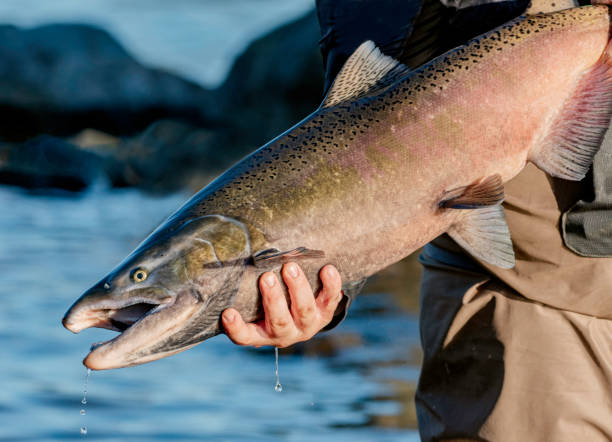
The Victorian Fisheries Authority provided an unexpected fish-naming lesson this week when it announced the stocking of 4,000 Chinook Salmon into Lake Purrumbete.
VFA's Snobs Creek hatchery is the only facility in Australia breeding these fish, which are stocked into Lakes Purrumbete and Bullen Merri.
Nothing unusual about that.
Except the fish is Oncorhynchus tshawytscha—the same species extensively farmed in New Zealand and marketed to Australian consumers as King Salmon.
So why does the same fish apparently change its name when it crosses the Tasman?
New Zealand producers are doing nothing unusual by using King Salmon. The name is recognised within New Zealand's own naming arrangements.
But Australia has its own Australian Fish Names Standard, AS 5300, and its Standard Fish Name for Oncorhynchus tshawytscha is Chinook Salmon.
SCA's position is straightforward:
Stick with Chinook Salmon—or use the established Fish Names Committee process to apply to change the Australian Standard.
The latest Fish Names Committee update demonstrates that this process is alive and functioning. 121 new Standard Names have recently been approved following public consultation, while another 96 proposed additions are progressing to consultation. Gmail - Australian Fish Names S…
Perhaps King Salmon deserves recognition under the Australian Standard.
If so, make the case.
This isn't anti-New Zealand or anti-aquaculture.
It's pro-consumer, pro-consistency and pro-integrity.
New SCA blog
Chinook or King? One Fish, Two Names — and an Australian Standard That Should Matter
Australia has a Sustainable Ocean Plan
The Australian Government this week released Australia's first national Sustainable Ocean Plan, establishing a shared direction for the future of our ocean and ocean economy.
The Government says Australia's ocean economy generates approximately $229 billion annually and supports more than 700,000 jobs. Encouragingly for SCA, the Plan explicitly recognises fisheries and aquaculture as contributors to food security.
The eight priorities include climate action, growing ocean industries, working with First Nations peoples, protecting and restoring the marine environment, strengthening collaboration, equity and inclusion, building knowledge and mobilising finance.
SCA welcomes much of that direction.
But we think there is an important question to keep asking:
What does “sustainable” actually mean?
Environmental sustainability is essential.
But genuine sustainability must also encompass food production, economic viability, regional communities, livelihoods and consumers.
Protection and production should not automatically be treated as enemies.
Hinchinbrook demonstrates the challenge
That question is particularly timely in Queensland.
The Queensland Seafood Industry Association is calling for reconsideration of restrictions affecting commercial net fishing around Hinchinbrook, arguing that fishing families, regional communities and seafood consumers have been adversely affected.
QSIA argues that fishing opportunities have been progressively restricted and says reconsideration could provide opportunities for local fishers and consumers. Qld Media re Hinchinbrook
There are, of course, important environmental considerations on the other side.
SCA is not prejudging that debate.
Our point is broader.
When governments restrict food-producing activities, decision-makers should transparently examine not only the environmental benefit but also:
How much food production disappears?
Where will replacement seafood come from?
Will imports increase?
What happens to prices?
What happens to regional jobs and businesses?
Does fishing effort simply move somewhere else?
Those questions don't prove a restriction is wrong.
They help determine whether the complete consequences of the decision have been understood.
That echoes the lesson from the late Professor David Hughes—Dr Food—which we explored recently:
Start with the consumer.
Read: Dr Food's lasting lesson for Australia's seafood future
New SCA blog
A Sustainable Ocean — But Sustainable for Whom?
Consumers need a seat at Australia's new ocean table
One aspect of the Sustainable Ocean Plan particularly interests SCA.
The Australian Government proposes establishing a National Ocean Steering Committee and National Ocean Advisory Group to improve coordination and bring different perspectives into ocean decision-making.
Our response is simple:
Make sure consumers are represented.
Industry needs a voice.
Scientists need a voice.
First Nations peoples need a voice.
Environmental organisations need a voice.
Governments need to be there.
But the people who ultimately purchase, cook and eat Australia's aquatic food deserve representation too.
SCA will be watching the membership process closely.
MPA submission — information gathering now closed
Thank you to everyone who has provided SCA with reports, data, experiences and other information relevant to our work on Australia's marine parks and marine management arrangements.
We have now stopped accepting additional material for inclusion in this submission.
We have received a substantial amount of relevant information and, with the submission due on 30 September, our attention now turns to assessing that material and preparing the strongest evidence-based submission possible.
Our approach will continue to examine environmental objectives alongside potential impacts on seafood production, displacement, regional businesses and communities, food security and consumers.
Thank you sincerely to everyone who contributed.
When Seafood Makes Us Sick, Who Knows?
The latest SafeFish update identifies an interesting group of high-priority seafood-safety research areas:
arsenic and cadmium; ciguatera; emerging biotoxins in novel seafood; food fraud; heavy metals and PFAS; and Vibrio species. 52a904f7-c7df-46cf-a85a-176e951…
One proposal particularly caught SCA's attention.
SafeFish is investigating the potential establishment of a consumer self-reporting platform for seafood illness, potentially supporting reporting of illness events, affected species and locations. 52a904f7-c7df-46cf-a85a-176e951…
We think that idea deserves serious consideration.
An isolated seafood illness may tell us relatively little.
Multiple consumers reporting similar symptoms associated with the same species, harvesting area, supplier or establishment might tell us considerably more.
Consumers can potentially become part of the early-warning system.
What exactly does “sashimi grade” mean?
That SafeFish work also led us into another interesting consumer question.
Australians increasingly consume seafood raw or Ready-to-Eat through sashimi, sushi, raw oysters, smoked seafood and other products.
FSANZ advises consumers preparing raw fish dishes to purchase fish labelled “sashimi grade” from a reputable supplier.
But that raises perfectly reasonable questions:
What exactly does “sashimi grade” guarantee?
Who determines the grade?
What controls sit behind the description?
What freezing, parasite-control and cold-chain requirements apply?
And what should a retailer or restaurant be able to tell a consumer who asks?
We are not suggesting sashimi is unsafe.
We are suggesting that terminology associated with food safety should have a meaning consumers can understand and trust.
That is an issue SCA intends to explore further.
New SCA blog
When Seafood Makes Us Sick, Who Knows?
NEW — Welcome to The Blue Plate
I've created a new table—and everyone interested in seafood, food and health is invited to take a seat.
This week I launched The Blue Plate, a new Substack publication exploring seafood, nutrition, food integrity, affordability and something that has become increasingly important to me after more than 50 years working with seafood:
The consumer's right to know.
Why The Blue Plate?
Because conversations about seafood too often take place between governments, industry organisations, scientists, environmental groups and regulators while the person who ultimately buys, cooks and eats the product sits somewhere down the end of the conversation.
I want to help change that.
The Blue Plate will explore everything from omega-3s, brain health and the First 1,000 Days to seafood fraud, aquaculture, sustainability, fish names, affordability, food security and Australia's Blue Economy.
Sometimes we'll challenge industry.
Sometimes we'll challenge government.
Sometimes we'll challenge conventional wisdom.
But we'll always return to one question:
What does this mean for the consumer?
The first article asks:
What Belongs on The Blue Plate?
and establishes three principles:
Nutritional integrity.
Economic fairness.
Truth in provenance.
The Blue Plate will complement rather than replace SCA. SCA remains our formal consumer advocacy and policy organisation. The Blue Plate gives me room for a more personal conversation drawing upon more than five decades in seafood.
Welcome to The Blue Plate. Pull up a chair.
COMING IN OCTOBER — I-CADMUS Global Seafood Integrity Watch
Seafood fraud does not stop at national borders—and neither will I-CADMUS.
Beginning in October, SCA will publish the:
I-CADMUS GLOBAL SEAFOOD INTEGRITY WATCH
a monthly review tracking significant seafood fraud, enforcement, research and regulatory developments around the world.
Each edition will examine developments through the seven elements of I-CADMUS:
I — Illegal
C — Counterfeit
A — Addition/Adulteration
D — Dilution
M — Misrepresentation/Mislabelling
U — Unreported/Unregulated/Undisclosed
S — Substitution
The first edition will cover September 2026, and there is already plenty to investigate—from illegal fishing and black-market seafood to international enforcement operations and important new research into the scale and economics of illicit seafood trade.
But this will be more than a collection of news stories.
We will follow seafood from ocean to plate—asking how illegal or fraudulent product enters legitimate supply chains, where controls fail, what authorities are doing about it and, ultimately, what it means for consumers.
Each monthly Watch will include international cases, an Australia Watch, emerging research and regulation, key numbers and I-CADMUS analysis.
The cases will also begin populating the developing I-CADMUS Global Seafood Integrity Case Register, building an evidence base for research, policy, education and future I-CADMUS training.
First edition: September 2026
Publishing in early October.
The catch may begin at sea, but trust has to survive all the way to the consumer.
A busy week — but one common message
At first glance, Chinook Salmon, the Sustainable Ocean Plan, Hinchinbrook, ciguatera, sashimi, The Blue Plate and international seafood fraud might seem like completely different subjects.
They aren't.
They all eventually arrive at the same place.
The consumer.
What are we eating?
Is it safe?
Is it what the label or menu says it is?
Where did it come from?
Can we afford it?
Is its production sustainable?
And when governments make decisions about the resources producing our food, is anyone sitting at the table asking those questions on our behalf?
That is why the Seafood Consumers Association exists.
And with The Blue Plate and the new I-CADMUS Global Seafood Integrity Watch, we're going to be asking those questions even more loudly.
Until next week — stay informed, keep asking questions, and enjoy your seafood.
Comments
No comments yet.