

Protecting the Ocean Without Forgetting the Food It Produces
Australia is a maritime nation. Our oceans are environmental treasures, but they are also working ecosystems that provide food, livelihoods, regional employment and an important part of our national food security.
Protecting them matters.
So does ensuring Australians continue to have access to nutritious, sustainable and affordable seafood.
Those objectives should not be regarded as competitors.
That is one of the important messages emerging from submissions by the South Australian Sardine Industry Association (SASIA) and Tuna Australia during the current review of Australia's marine park management arrangements.
The Seafood Consumers Association believes their arguments raise questions extending well beyond the interests of individual fishing industries.
They raise a fundamental consumer question:
Can Australia protect more of its marine environment while also protecting its capacity to produce sustainable seafood?
We believe the answer should be yes.
But achieving both requires considerably more than drawing lines on maps.
The remarkable story behind a small fish
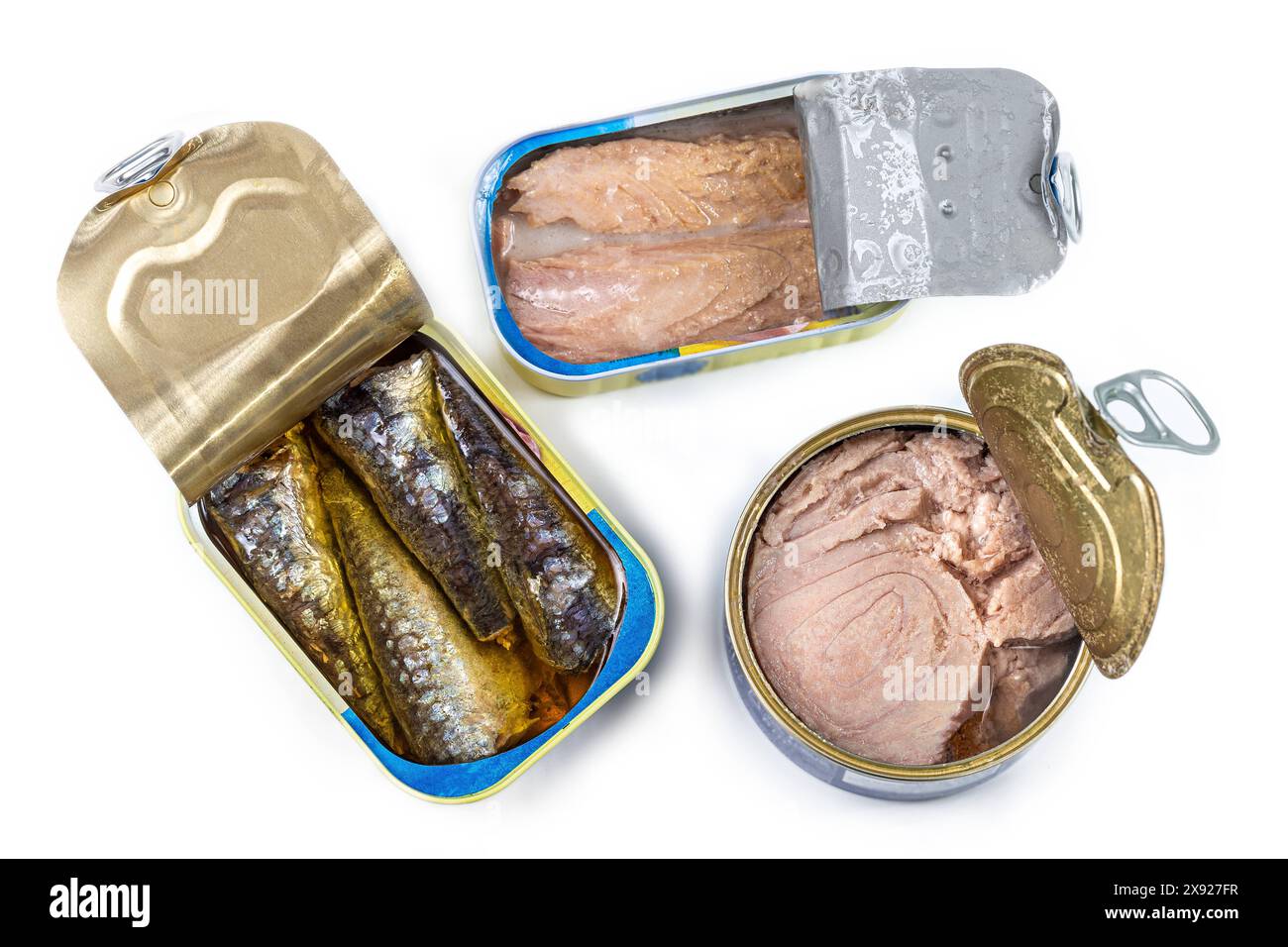
The South Australian sardine is not necessarily a fish that attracts much public attention.
Yet the South Australian Sardine Fishery is substantial.
According to SASIA, in 2024–25 it landed 47,494 tonnes of sardines, generated approximately $33 million in Gross Value of Production, contributed about $45.2 million to South Australian Gross State Product and supported 226 full-time-equivalent jobs — 179 of them on Eyre Peninsula.
But there is another part of this story consumers may find surprising.
The sardine fishery provides critical feed for South Australia's Southern Bluefin Tuna aquaculture industry.
Suddenly, a decision concerning access to sardine fishing grounds is not simply about sardines.
There is a chain:
Fishing grounds → sardines → tuna aquaculture → seafood businesses → regional jobs → markets → consumers.
It is an excellent illustration of why marine spatial planning needs to consider the seafood system as a whole.
Marine park boundaries are fixed. Fish are not.
SASIA makes another deceptively simple observation:
“Marine park boundaries are fixed. Sardines are not.”
Sardines are highly mobile pelagic fish. Their distribution changes according to environmental conditions, oceanography and stock demographics.
Tuna and other pelagic species present similar spatial challenges.
A fishing area that appears relatively unimportant when judged against recent catch records may become important under different oceanographic conditions.
That matters increasingly in an era of changing oceans.
It also means that removing access to a relatively small area may have effects far greater than its size suggests.
The correct measurement therefore cannot simply be:
How many square kilometres were protected?
We should also ask:
What happens outside the line after it is drawn?
The problem of “spatial squeeze”
One of the most useful concepts in the sardine submission is cumulative spatial squeeze.
Fishing does not operate in an empty ocean.
Commonwealth marine parks, State marine parks, existing fisheries closures and other uses of marine space can progressively reduce the areas available to fishing. SASIA argues that further restrictions can displace fishing effort, increase searching and steaming distances and reduce the ability of vessels to respond to changing fish distributions.
That deserves much more attention.
A closure may protect one geographical area, but fishing effort does not necessarily disappear.
It may move.
If vessels have to travel further, fuel use may increase. If fishing effort becomes concentrated elsewhere, different pressures may arise. If access to productive grounds becomes uneconomic, domestic production may decline.
And if Australians continue eating the same amount of seafood, reduced Australian production does not necessarily mean reduced consumption.
It can mean greater reliance on imported seafood.
That is why displacement should be considered not merely as an industry problem but as an environmental, economic, food-security and consumer issue.
Conservation and seafood production are not enemies
Perhaps the most important sentence in the SASIA submission is this:
“Healthy marine ecosystems and sustainable seafood production are not competing objectives.”
We agree.
Without healthy oceans there can be no enduring seafood industry.
Consumers have an enormous stake in biodiversity, healthy fish stocks and functioning marine ecosystems.
But conservation policy should also distinguish between different activities and the pressures they create.
For example, SASIA points out that purse seine fishing targets mobile schools of pelagic fish in the water column and argues that it has little or no impact on benthic habitats. It therefore asks that any proposal to remove existing fishing access demonstrate both an identified conservation need and evidence that the fishery contributes materially to the pressure being addressed.
That suggests a useful principle:
Manage the pressure, not simply the activity.
If the principal pressure on a marine ecosystem is climate change, pollution, invasive species or shipping, restricting an already managed fishery will not necessarily address that problem. SASIA makes precisely this point.
Marine conservation should therefore begin with identifying the environmental value requiring protection, the threat to that value, and the most effective intervention.
Sometimes exclusion of fishing may indeed be the appropriate answer.
But it should be the result of the evidence, not the starting assumption.
Tuna demonstrates how sophisticated fisheries management has become
The Tuna Australia submission adds another important dimension.
Australia's tuna fisheries operate within a substantial management and assessment framework involving catch and spatial controls, vessel-level accountability, wildlife mitigation, research and continuous improvement.
The submission discusses AFMA ecological risk assessment, EPBC Act environmental assessment and independent international sustainability assessment, while also examining electronic monitoring, wildlife mitigation and research programs.
That does not mean fishing is impact-free.
No food-production system is.
It does mean that marine park decisions should recognise the fisheries management systems already operating and identify what additional conservation benefit a spatial exclusion is expected to deliver.
SASIA makes a similar point. Its fishery is already managed through catch limits, spatial management, vessel monitoring and environmental assessment, including an EPBC Act environmental assessment process. It argues that marine park measures should complement these arrangements rather than duplicate them unless an additional place-based conservation risk is demonstrated.
That seems a reasonable test.
30 by 30 — but quality matters as much as quantity
Australia has committed to the international objective of protecting 30 per cent of land and sea by 2030.
Protecting marine biodiversity is an important national responsibility.
But there is a danger whenever a percentage becomes the objective rather than a measure of progress.
SASIA specifically argues that productive fishing grounds should not be rezoned simply to add area towards the 30 by 30 target; individual changes should instead be justified by conservation values and risks.
The Tuna Australia submission similarly argues for marine spatial decisions to be based on reliable fisheries time series, the dynamic nature of pelagic environments, community values and appropriate application of precaution, while treating highly protected area targets as policy objectives rather than automatic justification for every individual zoning decision.
For consumers, the question should therefore not simply be:
How much ocean is protected?
It should also be:
What environmental outcome is the protection achieving?
A smaller area protecting an identified ecological value from a demonstrated threat may potentially deliver more conservation benefit than a much larger area selected primarily because it helps meet a numerical target.
Good conservation should be measured by outcomes, not hectares alone.
Where are consumers in this discussion?
Marine park debates often involve governments, environmental organisations, fishing industries, scientists and regional communities.
All are legitimate stakeholders.
But another group has an interest that is easily overlooked:
the people who ultimately eat the food.
Australian consumers have an interest in marine biodiversity.
They also have an interest in domestic food production, seafood affordability, nutrition, regional employment, provenance, traceability and the resilience of Australia's food supply.
These interests do not disappear when a marine park boundary is drawn.
Indeed, they should be part of the decision.
The Seafood Consumers Association therefore believes marine spatial planning should include an explicit seafood and consumer impact assessment wherever significant changes to fishing access are proposed.
Six questions worth asking before changing access
Before removing access to an established, sustainably managed fishing area, decision-makers should be able to answer six straightforward questions.
1. What conservation value are we protecting?
The ecological objective should be clearly identified.
2. What is threatening it?
There should be evidence linking the activity being restricted to the environmental pressure being addressed.
3. What measurable conservation improvement will excluding fishing deliver?
Protection should have an outcome, not merely add area to a map.
4. Where will the displaced fishing effort go?
The cumulative consequences of State and Commonwealth restrictions should be considered, including additional steaming, fuel use and concentration of effort elsewhere.
5. What happens to seafood production, regional communities and consumers?
Domestic supply, employment, business viability, affordability and possible substitution by imports should form part of the assessment.
6. Could the same conservation outcome be achieved in another way?
Existing fisheries management, seasonal controls, gear restrictions, monitoring, adaptive management or other targeted interventions should be considered alongside permanent exclusion.
These are not arguments against marine parks.
They are arguments for better marine parks.
Protect the ocean — and remember why healthy oceans matter
Australia should aspire to world-leading marine conservation.
It should also aspire to world-leading sustainable seafood production.
The two objectives belong together.
The sardine and tuna submissions provide an important reminder that the ocean is dynamic, fisheries are interconnected, regional economies depend upon access to marine resources, and apparently simple spatial decisions can create consequences far beyond the lines appearing on a map.
For consumers, there is an additional consideration.
Seafood is food.
It provides protein and essential nutrients. It supports communities and businesses. And sustainable Australian seafood is part of our national food-production capacity.
We should therefore reject the idea that this debate requires Australians to choose between protecting fish and eating fish.
The better question is:
How do we protect healthy oceans so that they can continue producing sustainable food for generations to come?
That is the challenge Australia should set itself.
And consumers deserve a seat at the table when the answer is being decided.
Comments
No comments yet.