
Whole or peeled? Green or cooked? 16/20 or 31/40? Wild or farmed? Australian or imported? Prawns should be simple food — but buying them can be surprisingly complicated.
Australians love prawns.
They appear on Christmas tables, barbecues and seafood platters and in curries, stir-fries, pasta, fried rice and takeaway meals.
Yet stand in front of a seafood counter or supermarket freezer and the language can become confusing remarkably quickly.
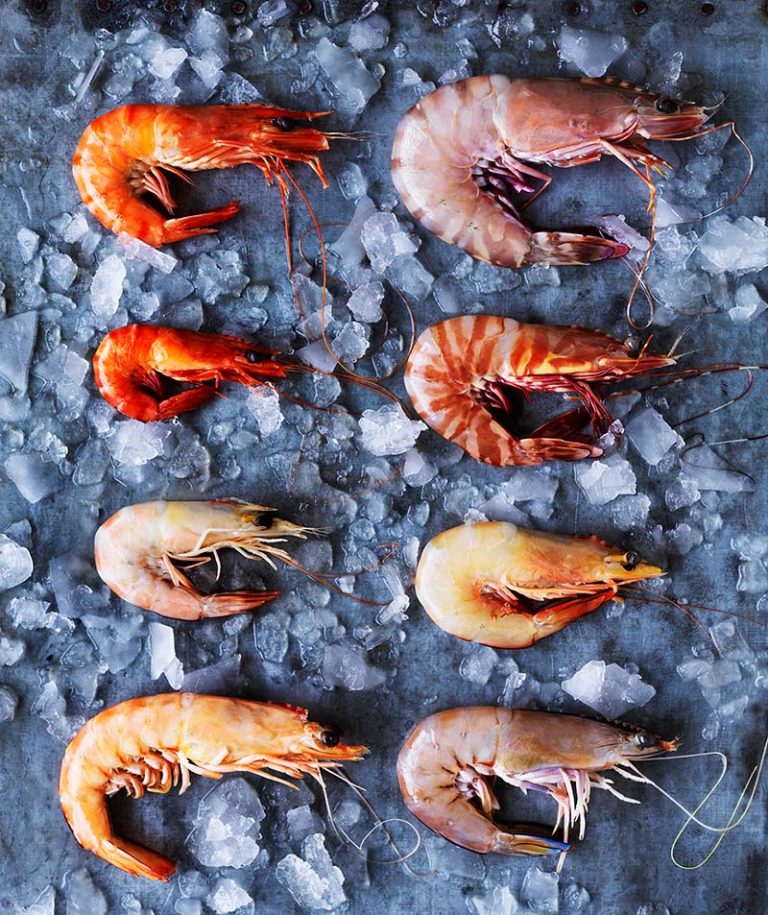
King, Tiger, Banana, Endeavour, Vannamei, green, cooked, whole, headless, cutlet, peeled, deveined, U/10, 16/20, 31/40, wild, farmed, local, imported — and sometimes “shrimp” rather than “prawn”.
What does it all mean?
More importantly, what are you actually getting for your money?
The Seafood Consumers Association believes consumers should be able to understand what they are buying without needing a seafood-industry dictionary.
First question: what form are you buying?
Prawns can be sold at very different stages of preparation.
Whole prawns retain the head, shell and tail. They can provide excellent flavour and presentation, particularly for barbecuing, platters and stocks, but a substantial proportion of the weight you purchase is not edible meat.
Headless shell-on prawns have already lost the head but retain the protective shell. They require some preparation but provide a higher edible yield.
Prawn cutlets generally have the head and most of the shell removed, often leaving the tail for presentation. Also known as Peeled Tail-on (PTO).
Peeled prawns remove virtually all of the shell, while peeled and deveined prawns (P&D) also have the digestive tract removed. Peeled Undeveined (PUD) are also sold.
And then there are cooked prawns, which require no further cooking if they are being eaten cold.
That distinction matters when comparing prices.
A kilogram of whole prawns is not equivalent to a kilogram of peeled prawn meat.
Depending upon species, size and processing, whole prawns may yield only around half their purchased weight as edible meat. Headless prawns yield considerably more, while peeled product approaches an entirely edible purchase.
So a $20/kg whole prawn is not necessarily better value than a substantially more expensive peeled product.
The price on the ticket is only part of the story.
Consumers should compare the approximate cost per kilogram of edible seafood, not simply the purchase price per kilogram.
Crack the prawn-size code
Then comes one of seafood retail's stranger traditions.
Australia is a metric country, yet prawns in international commerce are commonly graded by the number of prawns per pound.
That is why consumers encounter numbers such as:
U/10 — 10/15 — 16/20 — 21/25 — 31/40 — 41/50.
There is one very simple rule:
The smaller the number, the bigger the prawn.
A 16/20 grade means approximately 16 to 20 prawns make up one pound — 454 grams.
To get a rough idea of the number in a kilogram, multiply by 2.2.
So 16/20 equates to roughly 35–44 prawns per kilogram, while 31/40 means approximately 68–88 per kilogram.
And “U” means under — U/10 means fewer than 10 prawns per pound and therefore very large prawns.
Once you understand that simple rule, much of the mystery disappears.
Does bigger mean better?
Absolutely not.
Size is a grading measurement, not a guarantee of eating quality.
A huge prawn may look magnificent on a barbecue or seafood platter, while a smaller prawn may be perfect for pasta, dumplings, curries or fried rice.
Species, freshness, handling, freezing, storage and cooking can matter at least as much as size.
Consumers should therefore ask:
What am I cooking, and which prawn is best suited to it?
Not simply:
Which is biggest?
Prawns or shrimp?
Australians generally use the word prawn, while North American consumers generally use shrimp.
There are biological distinctions between the major groups, but international seafood trade and everyday marketing can blur the terminology.
That is another reason why proper species identification matters.
Consumers should be able to know what species they are purchasing rather than relying only upon a broad marketing description.
This is one of the reasons SCA continues to advocate mandatory use of Australia's Fish Names Standard, AS 5300.
Don't overlook Cold Water Shrimp
One particularly delicious product deserves its own mention.
Cold Water Shrimp, especially Pandalus borealis, are small compared with the large tropical prawns Australians commonly associate with seafood counters.
But small does not mean second-rate.
These cold-water crustaceans have a delicate texture and distinctive sweet flavour. They are commonly sold cooked and peeled and may appear refrigerated in small tubs, pottles or similar packs, as well as frozen or preserved products.
They can be excellent in sandwiches, salads, seafood cocktails, open sandwiches, pasta and other dishes where a large prawn would actually be less suitable.
Because they are usually already cooked, the trick is generally not to cook them again for an extended period. In a warm dish, add them towards the end so they heat through without becoming tough.
They provide a useful consumer lesson:
Judge seafood by eating quality and suitability — not simply by size.
And prawns don't only come from the sea
There are freshwater prawns and shrimp too.
Freshwater species occur naturally and are farmed in various parts of the world. Large freshwater prawns of the genus Macrobrachium, for example, form important aquaculture and wild-capture fisheries internationally.
Their flavour, texture, appearance and culinary uses can differ from familiar marine prawns.
Again, the consumer principle remains the same:
What species is it? Where did it come from? How was it produced? And is the name on the product giving you enough information to make an informed choice?
“Prawn” by itself tells only part of the story.
Wild versus farmed: which is better?
There is no honest universal answer.
Australia produces excellent wild-caught prawns, including King, Banana, Tiger and Endeavour Prawns. Australia also produces farmed prawns, particularly Black Tiger Prawns.
Imported farmed prawns — including Whiteleg or Vannamei prawns — provide substantial volumes of affordable seafood to the Australian market.
Wild and farmed products can both be excellent.
Nor should consumers automatically assume that wild tastes better or farmed tastes more consistent.
Eating quality can be affected by species, feed, environment, harvest method, freshness, freezing, processing, storage and, finally, how the consumer cooks it.
The better question is:
Is this a good example of the species and product I am buying?
Australian or imported?
Origin matters to many consumers, but it should provide information rather than become a substitute for judging the product itself.
Australian prawns support Australian fishing and aquaculture businesses and operate within Australian regulatory systems.
Imported prawns make an important contribution to supply, particularly in frozen, peeled and value-added categories, and can provide affordable seafood throughout the year.
Consumers should be given clear country-of-origin information so they can make their own decision.
And remember that where a prawn was harvested and where it was processed may not always be the same place.
Ask if you are unsure.
Frozen does not mean inferior
This is another persistent seafood myth.
A high-quality prawn frozen quickly and handled properly can be an excellent product — and may sometimes be in better condition than supposedly “fresh” seafood that has spent considerably longer moving through the supply chain.
At seafood counters, consumers may also encounter prawns that have previously been frozen and are being sold thawed.
There is nothing inherently wrong with that.
The important issue is honest description and proper handling.
Consumers should know what they are purchasing.
When one kilogram isn't necessarily one kilogram of prawn on your plate
Frozen prawns are often protected by an external layer of ice known as glaze.
Glazing serves a legitimate purpose. It helps protect frozen seafood against dehydration and deterioration during storage.
But consumers should not be paying prawn prices for excessive ice.
Australian trade measurement rules are important here: the declared net weight of pre-packaged frozen seafood must not include external water or ice glaze.
So, if the package says one kilogram net weight, that statement is supposed to represent the seafood — not the seafood plus its external protective ice coating.
That is an important consumer protection.
What about added water and other ingredients?
This is different from external ice glaze.
Some processed seafood products may contain permitted additives or added ingredients for legitimate technological purposes.
Australian labelling rules generally require ingredients to be listed in descending order by ingoing weight. Added water must generally also appear in the ingredient list, subject to specified exceptions.
Consumers therefore have another simple tool:
Turn the packet over and read the ingredients.
If you want prawns, find out what proportion of the product is actually prawn and what else you are purchasing with it.
Water, salt, brine, marinades and permitted food additives are not automatically signs of an inferior or improper product.
But consumers deserve transparency.
Raw, cooked — or “green”?
In Australian seafood terminology, green prawns means raw prawns.
It does not mean environmentally certified, immature or literally green.
Cooked prawns, of course, have already been cooked.
That sounds obvious, yet it matters in the kitchen.
One of the easiest ways to ruin an excellent cooked prawn is to cook it all over again.
For cold platters and salads, cooked prawns can simply be served chilled. If adding pre-cooked prawns to pasta, fried rice or another hot dish, often they need only enough time at the end to warm through.
Overcooking turns tender seafood dry and rubbery.
Ultimately, does it taste good?
After sustainability, origin, size, processing method, price, certification and all the other information consumers encounter, there remains one extraordinarily important question:
Do you enjoy eating it?
Taste matters.
So do texture, sweetness, firmness, aroma, appearance and consistency from one purchase to the next.
A sustainability certification can tell you something important about environmental credentials.
Country-of-origin information can tell you something important about provenance.
A species name tells you what animal you should be buying.
Food standards help protect safety.
Trade measurement laws protect the quantity you pay for.
But none of those, individually, guarantees that you will enjoy the prawn.
Consumers buy seafood to eat.
Quality and eating satisfaction therefore deserve a much bigger place in discussions about seafood trust.
Seven questions to ask when buying prawns
Before buying, consider:
1. What species is it?
2. Is it Australian or imported — and where was it processed?
3. Is it wild-caught or farmed?
4. Is it whole, headless, cutlet or peeled — and therefore what is the likely edible yield?
5. What does the size grade actually mean?
6. If frozen or packaged, what is the net seafood weight and what other ingredients are present?
7. Most importantly — is this the right prawn for what I want to cook, and do I enjoy eating it?
Prawns do not need to be complicated.
But consumers need more than a price ticket and an attractive display.
Know the species. Understand the size. Compare the edible yield. Check the origin. Read the ingredients. Choose the product for the meal — and never forget taste.
Because understanding what you are buying is one of the simplest foundations of consumer trust in seafood.
Seafood Consumers Association Ltd is an independent consumer-focused charity advocating for transparent, safe, sustainable, affordable and trustworthy seafood.
Comments
No comments yet.